


Blog Details

Navigating the Future of Marketing in Retail – A Personal Perspective

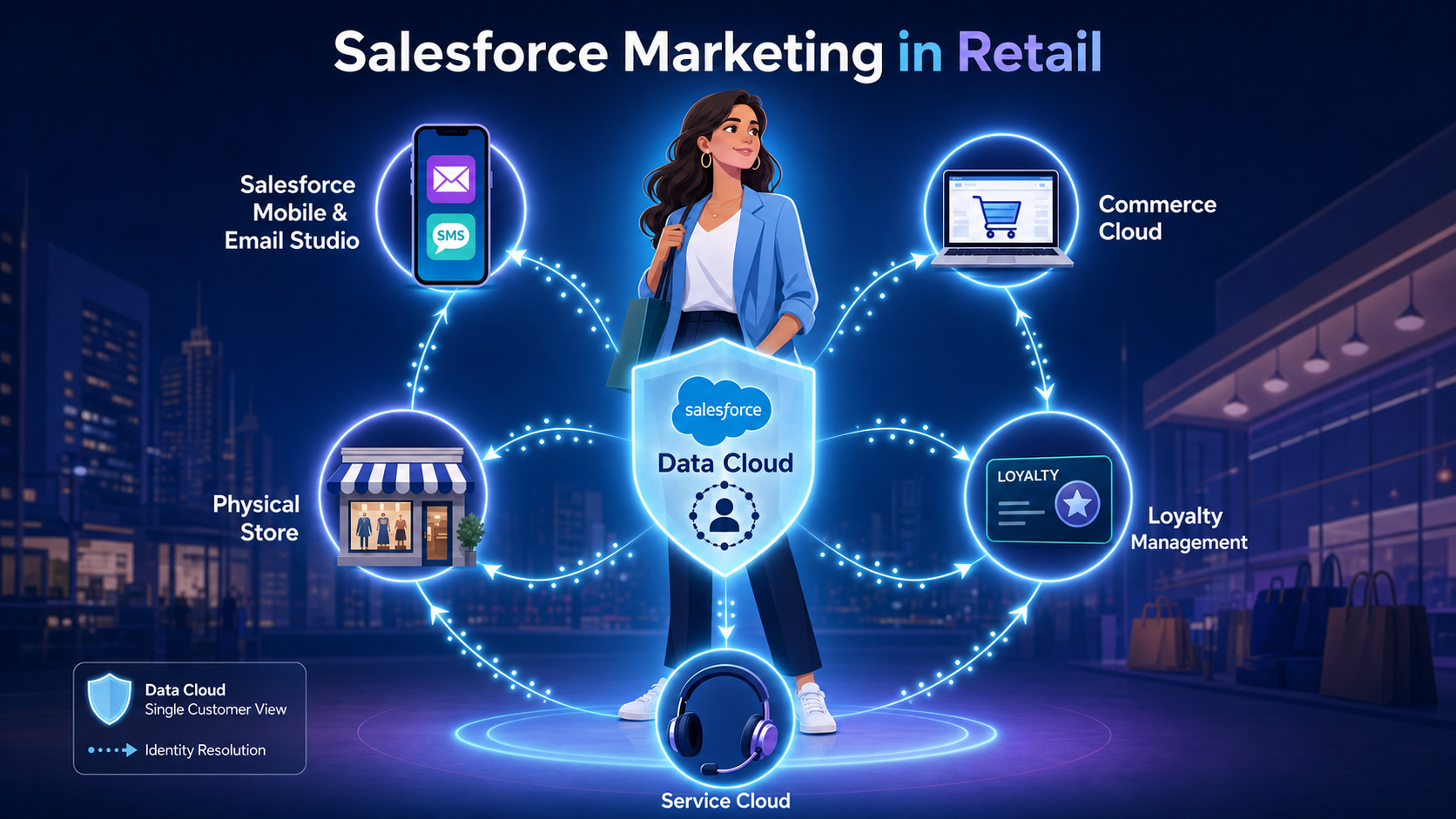
As a consultant who began his journey in the structured world of Salesforce Service Cloud, I view marketing differently than most. In Service Cloud, everything is about the "Record of Truth", the history, the sentiment/feeling, and the resolution/solution. When I migrated into Marketing Cloud, I realized that the best retail marketing isn’t just about "engagement", it’s about continuing a service conversation through a different channel.
The "next" generation of marketing is moving away from batch-and-blast emails and toward Real-Time Interaction Management (RTIM). We are moving from a world where we guess what a customer wants to a world where the data tells us exactly what they need, often before they know it themselves. This has been accelerated by the massive AI advances of the last few years, specifically with Salesforce Einstein and the arrival of Agentforce.
The Evolution: From Engagement to the "Next" Generation
For years, Marketing Cloud Engagement has been the gold standard for B2C communication. It’s where journeys are built, emails are designed, and SMS’s are managed. It is the execution engine.
However, the "Future", what Salesforce calls Marketing Cloud Next is represented by the convergence of Data Cloud, Einstein AI, and Agentforce. To understand this shift, I would break it down like this:
- Data Cloud is the Brain: It’s where we unify fragmented data from POS systems, e-commerce, and/or loyalty programs. It performs "Identity Resolution," ensuring we know that the person who clicked an email is the same person who just walked into a physical store.
- Einstein AI is the Intuition: It provides the predictive layer. It tells us which customer is likely to churn, which subject line will resonate, or which product recommendation will actually convert.
- Agentforce is the Action: This is the newest evolution. Agentforce acts as an autonomous layer that can handle tasks, like assisting a customer with a return or helping them find the perfect outfit, without needing a pre-defined, rigid journey. It moves us from "automated" to "autonomous."
- Marketing Cloud Next (or Engagement) is the Voice: It remains the vital delivery mechanism. It is how the "Brain" and "Intuition" communicate the message to the customer via Email, SMS, or Push.
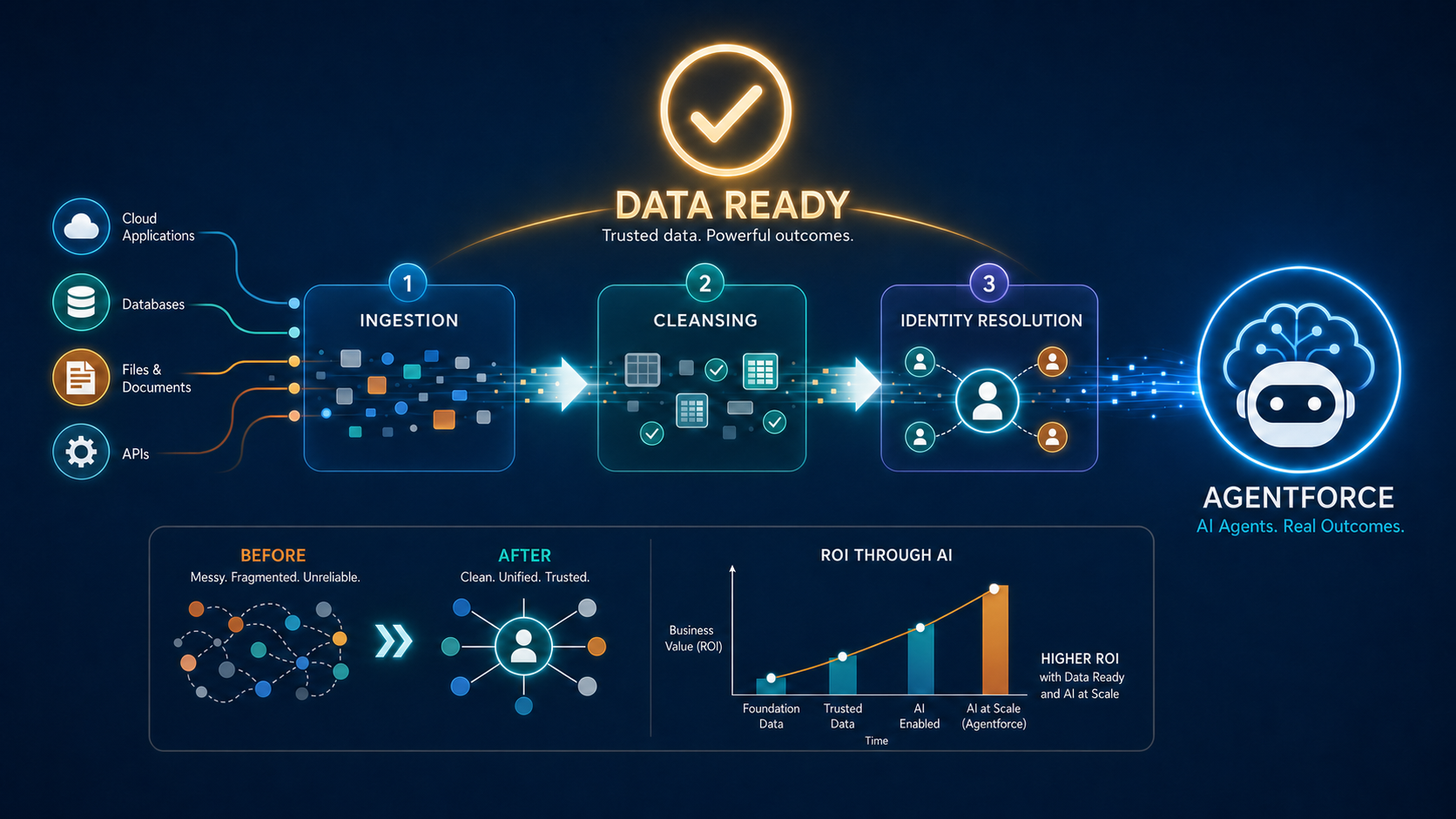
For a retailer, this shift means moving from "segmentation" (grouping people by static traits) to "personalization at scale" (treating every customer as a unique individual in real-time).
Lessons from the Trenches: What I’ve Learned Leading Retail Implementations
Deep technical knowledge is only half the battle. Strategic consulting is about managing expectations, data, and people. Reflecting on my work across fashion, luxury retail, automotive, and manufacturing, four key lessons stand out:
1. The "Crawl, Walk, Run" Philosophy
In a retail project I was tasked with modernizing several different brands simultaneously. I designed a plethora of distinct customer journeys and a centralized data model.
- The Challenge: The client wanted to implement highly complex, advanced features almost immediately to maximize their investment.
- The Lesson: Going too fast can overwhelm a marketing team. If the organization isn't ready to manage the complexity, the platform becomes a "Ferrari in a garage." It is always better to crawl (basic automation), walk (advanced segmentation), and run (AI-driven orchestration).

2. Data Readiness is the Foundation
On a retail project focused on hyper-personalization, the goal was to implement Einstein AI to drive product recommendations.
- The Challenge: AI is only as good as the data feeding it.
- The Lesson: If your data is scattered across legacy systems and siloed departments, the process will stall. You must have your data "in order", assembled, cleaned, and ready, before you can expect AI to deliver ROI.
3. Team Cohesion is the Secret Sauce
Having worked on a continuous improvement project for the automotive sector, with several Marketing Cloud Business Units worldwide with a heavy focus on GDPR compliance, I’ve learned that the team is the secret.
- The Challenge: The scale and legal complexity of global consentmanagement across dozens of markets.
- The Challenge: On multi-cloud projects, technical skill isn't enough.You need a tight-knit team where everyone’s strengths complement the others. Inthis project, the success wasn't just in the code, it was in the cohesion ofthe consultants and developers working as a single, unified front.
4. Respecting the "Unknown" in Custom Solutions
For a retail market leader, my team didn't just implement out-of-the-box features, we developed a completely custom module leveraging their existing infrastructure.
- The Challenge: Building a custom solution within the constraints of a standard SaaS platform.
- The Challenge: When facing "the unknown" technically, you must be hyper-aware of time and scope constraints. Custom builds offer immense power, but they require a disciplined approach to architecture to ensure they remain scalable and maintainable.
Technical Insights: Building for Retail Scale
When I look under the hood of a successful retail implementation, three technical pillars support the weight of the strategy:
The Multi-Brand Data Model
For retailers managing multiple sub-brands, the architecture must balance centralization with isolation. Using Marketing Cloud Business Units (BUs) and Shared Data Extensions allows a parent company to maintain a "Global View" while ensuring each brand’s marketing remains distinct. In the "Marketing Next" era, this is evolving into Data Spaces (and Business Units also) within Data 360, allowing for even more granular control over how data is shared across brands.
Real-Time Compliance
In every sector, GDPR isn't just a checkbox, it’s a critical requirement. In the Marketing Engagement world, I’ve found success building Custom Preference Centers via Web Studio that sync bi-directionally with Sales and Service Clouds. In Marketing Cloud Next, compliance is becoming more "baked in." Data Cloud handles much of the heavy lifting regarding consent management and identity resolution, ensuring that a "Do Not Track" request is respected across every single touchpoint instantly.
Automation Studio: The Powerhouse of Customization
In Marketing Cloud Engagement projects I’ve been a part of, Automation Studio has always been an essential part of the equation. By using SQL and Script activities, you can devise almost any custom development you can think of. While the future is moving toward the "clicks-not-code" flow of Data Cloud, the extensibility of Automation Studio proves that Marketing Cloud is a nearly limitless canvas for a creative architect.
Conclusion: The Road Ahead
Marketing in Retail is no longer about the "sale." It’s about the relationship. Whether you are a luxury brand focused on a "White Glove" service or a mass-market retailer focused on efficiency, the goal is the same: use your data to be more human.
As you look toward the future of Marketing Cloud, remember the lessons from the field: start with a solid data foundation, build a cohesive team, respect the scope of custom builds, and, most importantly, don't be afraid to walk before you run.
Want to know more about marketing in retail? Get in contact with us!
book a demo

